顯示具有 攝影比賽 Photo Competition 標籤的文章。 顯示所有文章

2018年5月19日 星期六

2017 Audubon Photography Awards, 奧杜邦攝影大賽

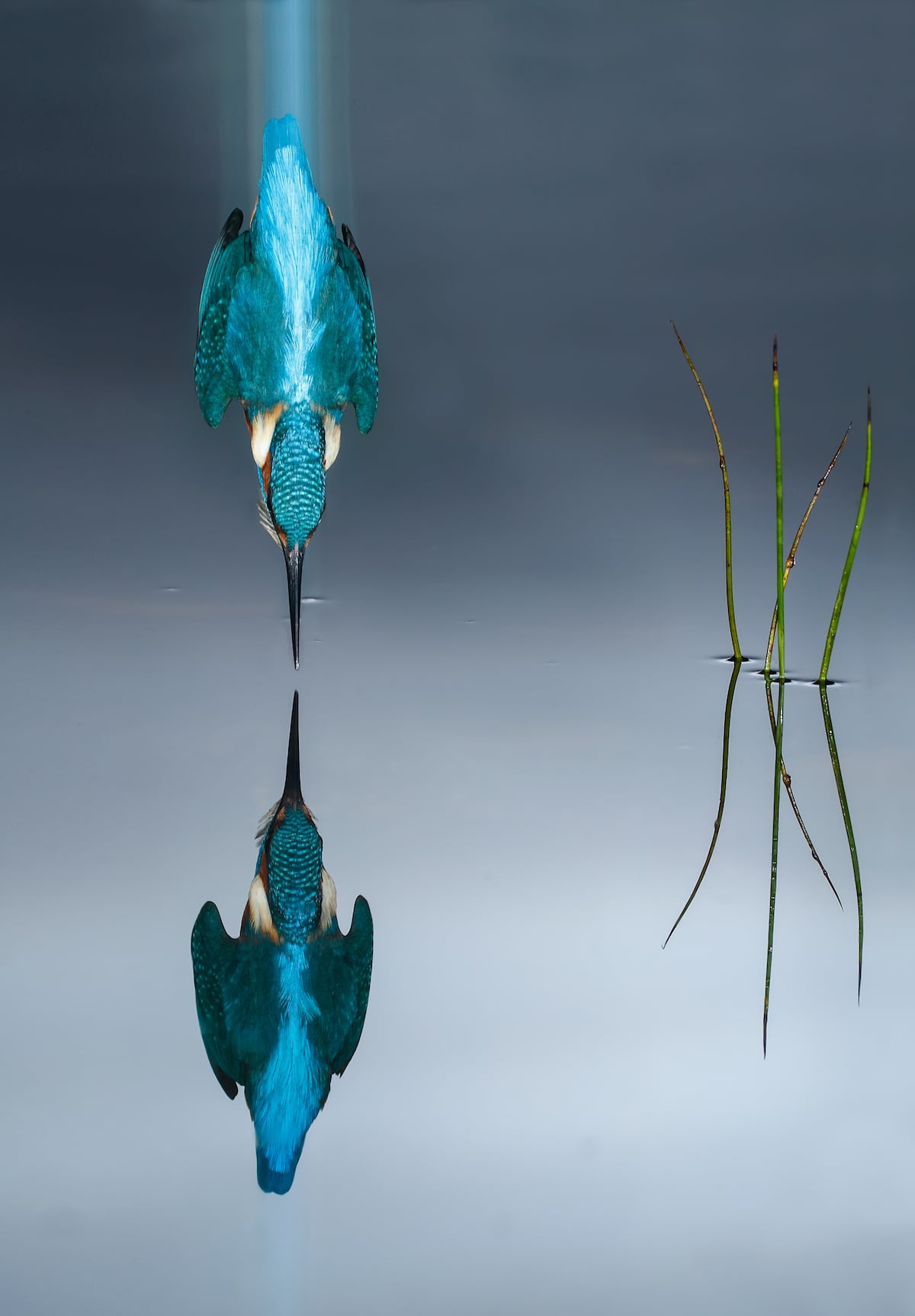
Kingfisher diving (Spain) by Mario Cea Sanchez
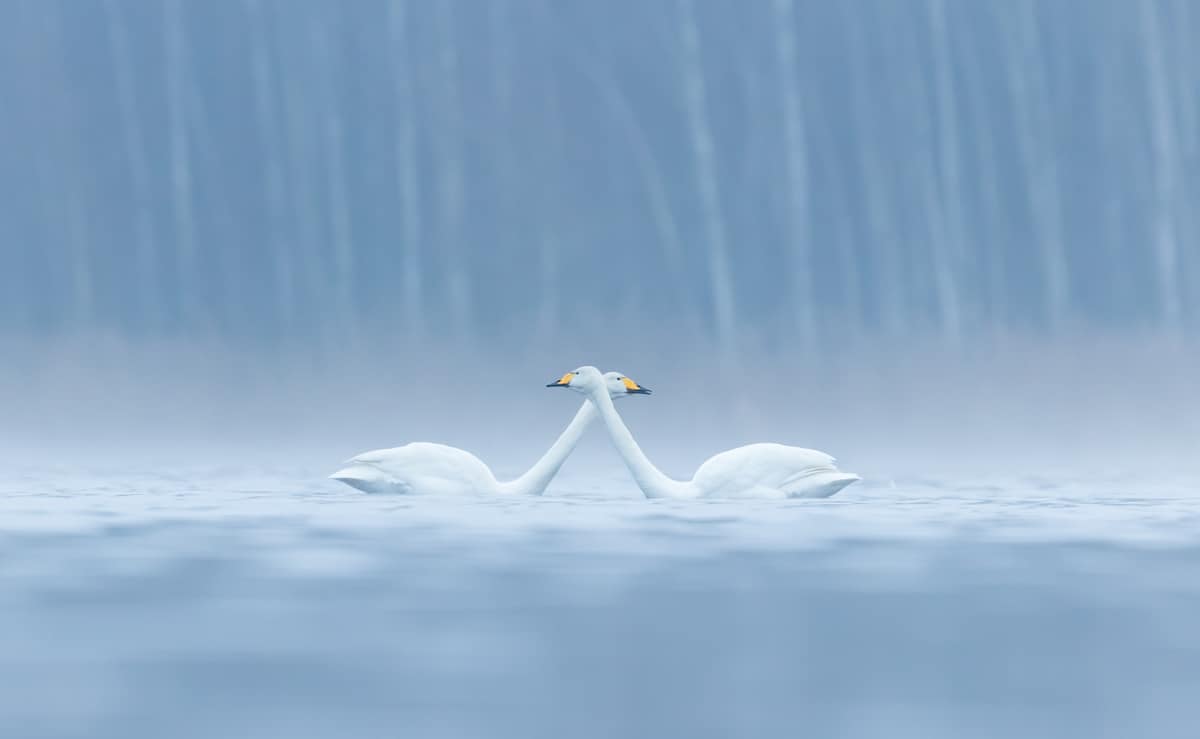
Whooper swans (Janakkala, Finland) by Antti Siponen
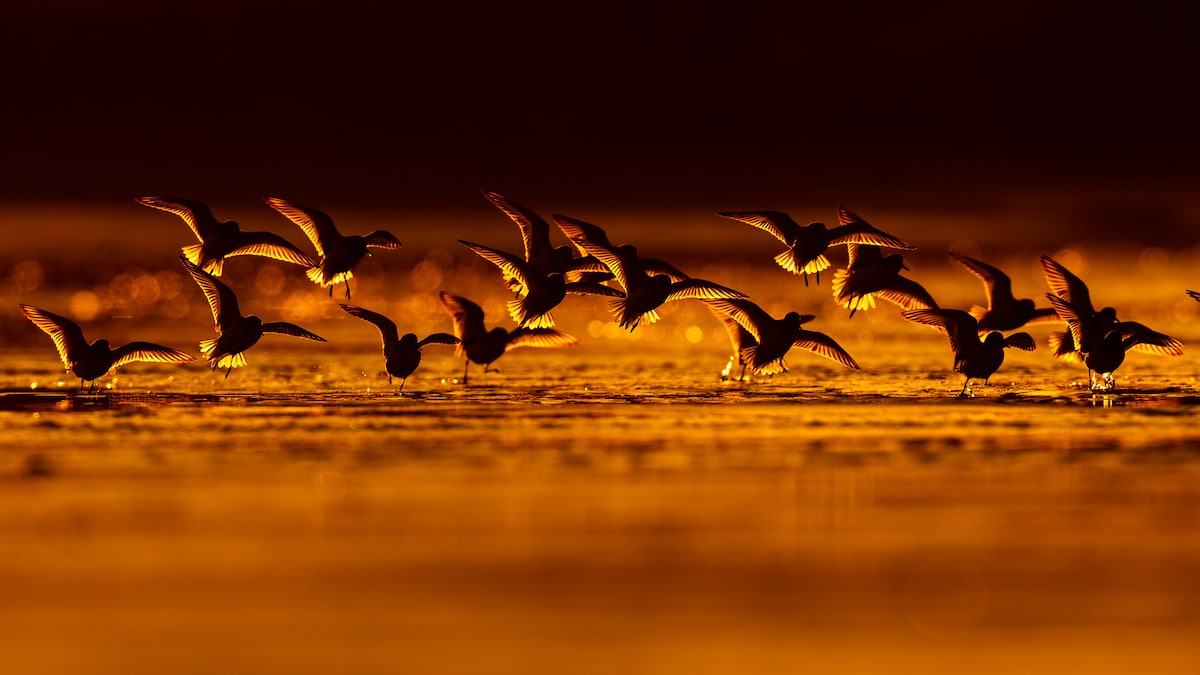
Sanderling wading birds stop during migration (Asturias, Spain) by Mario Suarez Porras
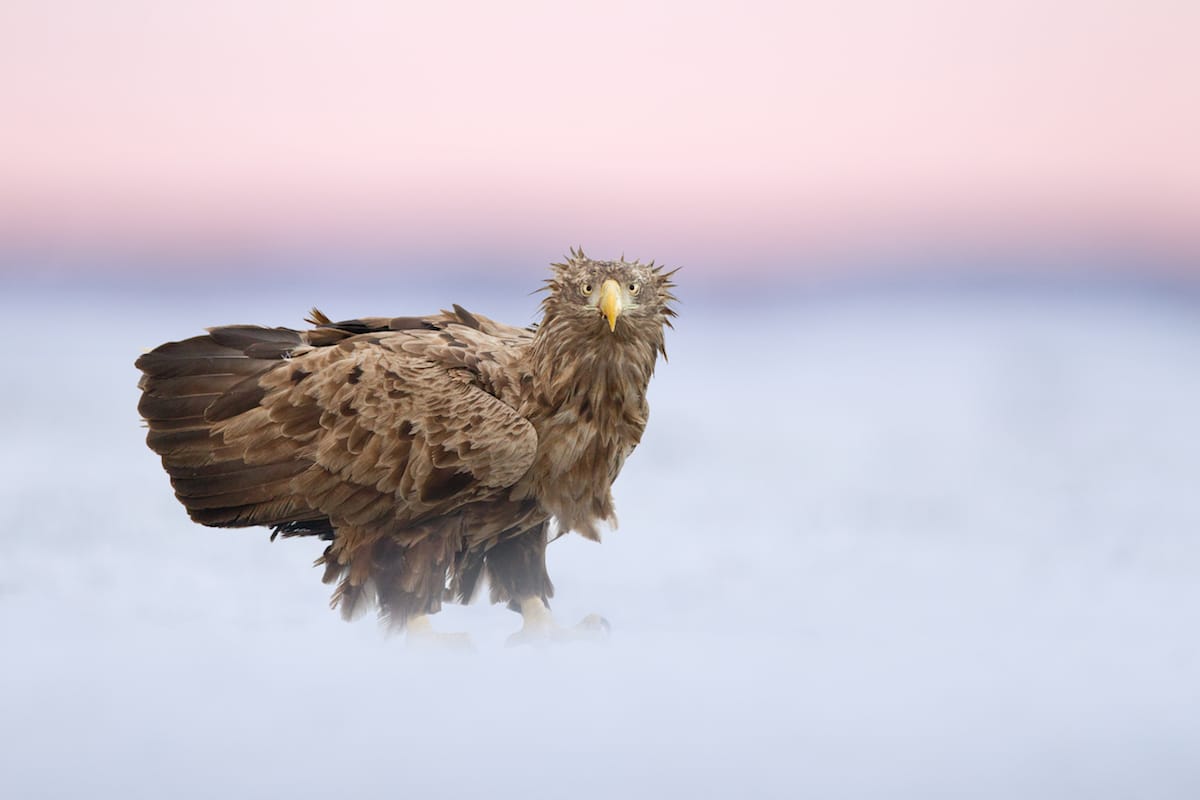
White-tailed eagle (Hortobágy, Hungary) by Ben Hall
Snowy owl (Canada) by Markus Varesvuo
Water rail (Salamanca, Spain) by Mario Cea
Bird Photographer of the Year Awards Features the Best Bird Photography
https://mymodernmet.com/bird-photographer-of-the-year-2018/

2018年4月5日 星期四

UK Bird Photographer of the Year 2018, 英國2018年鳥類攝影師大賽

Whooper swans, Janakkala, Finland. (Photo by Antti Siponen/BPOTY/Cover Images/The Guardian)
Water rail, Salamanca, Spain. (Photo by Mario Cea/BPOTY/Cover Images/The Guardian)
Kingfisher diving, Spain. (Photo by Mario Cea Sanchez/BPOTY/Cover Images/The Guardian)
UK Bird Photographer of the Year 2018
http://avax.news/touching/UK_Bird_Photographer_of_the_Year_2018.html

2017年12月31日 星期日

Royal Society photo award winners, 2017. 2017年度英國皇家學會攝影大賽獲得者

Icy Sugar Cubes, by Peter Convey, was named overall winner and winner in the Earth Science and Climatology category. The photo, taken in early 1995 during a flight over the English Coast (southern Antarctic Peninsula), shows the scale of unusual bi-directional crevassing as an ice sheet is stretched in two directions over an underlying rise.
Toss the Scorpion - Indian Roller Playing with the Kill, by Susmita Datta was given an honourable mention in the Behaviour category.
In pictures: Royal Society photo award winners - BBC News
http://www.bbc.com/news/in-pictures-42237203

UK Royal Society Publishing Photography Competition 2017 Winners. 英國皇家學會2017年出版攝影競賽獲獎者

Winner, Behaviour category. Respiro by Antonia Doncila. This photograph was taken while crossing the Fram Strait near the eastern Greenland coast. The polar bear found a portion of fast ice which rapidly became his home. (Photo by Antonia Doncila/PA Wire/Royal Society Publishing Photography Competition 2017)
Overall winner, and winner in Earth Science and Climatology category. Icy Sugar Cubes by Peter Convey. A photograph taken over the English Coast (southern Antarctic peninsula) illustrating the scale of unusual bi-directional crevassing as an ice sheet is stretched in two directions over an underlying rise, with a Twin Otter aeroplane as scale. (Photo by Peter Convey/PA Wire/Royal Society Publishing Photography Competition 2017)
Winner, Ecology and Environmental Science category. Waiting in the Shallows by Nico de Bruyn. Orcas suddenly enter a small bay at subantarctic Marion Island, surprising a small huddle of king penguins busy preening themselves in the water. (Photo by Nico de Bruyn/PA Wire/Royal Society Publishing Photography Competition 2017)
Runner up, Ecology and Environmental Science category. Invincible ants by Thomas Endlein. Pitcher plants are carnivorous, drawing nutrients from trapped and digested insects. The species shown here (Nepenthes bicalcarata) secretes sweet nectar on the rim and fang-like structures, which are very slippery for most insects except for one specialised ant (Camponotus schmitzii). The ants live in the curled hollow tendrils of the plant and manage to climb in and out of the pitcher without any difficulties to steal a bit of nectar, as shown here. (Photo by Thomas Endlein/PA Wire/Royal Society Publishing Photography Competition 2017)
Winner, Micro-imaging category. Olive oil drop family hanging together by Herve Elettro. (Photo by Herve Elettro/PA Wire/Royal Society Publishing Photography Competition 2017)
UK Royal Society Publishing Photography Competition 2017 Winners
http://avax.news/fact/UK_Royal_Society_Publishing_Photography_Competition_2017_Winners.html

Art of Building Photography Awards 2017, 2017年建築攝影比賽藝術獎

“Eye of the Tower” by Mehmet Yasa; Verona, Italy. “The staircase and the bell looks like an eye. Architecture can fascinate us in many ways”. (Photo by Mehmet Yasa/Art of Building Photography Awards 2017)
“Cross Bridge Waltz” by Guo Ji Hua; Guangdong, China. “This work uses unmanned aerial vehicles. The intersection has an abstract line of beauty”. (Photo by Guo Ji Hua/Art of Building Photography Awards 2017)
“Abandoned School in Fresno” by Robert Cassway; Montana, USA. “This photo shows the ravages of time and weather on a building that was left to decay after the families that lived in Fresno moved away. It is part a larger series of photographs titled The Vanishing West”. (Photo by Robert Cassway/Art of Building Photography Awards 2017)
Art of Building Photography Awards 2017
http://avax.news/touching/Art_of_Building_Photography_Awards_2017.html

2017年11月12日 星期日

Comedy Wildlife Photography Awards 2017, Finalists. 搞笑野生動物攝影獎, 入圍

A baby lemon shark shows a big smile in front of the camera, taken in Bimini, the Bahamas. (Photo by Eugene Kitsios/Comedy Wildlife Photography Awards/Barcroft Media)
These two monkeys broke away from their group to “test drive” a motorbike parked near the entrance to the reserve in Tangkoko Batuangus Nature Reserve, Indonesia. (Photo by Josef Friedhuber/Comedy Wildlife Photography Awards/Barcroft Media)
Comedy Wildlife Photography Awards 2017 Finalists
http://avax.news/funny/Comedy_Wildlife_Photography_Awards_2017_Finalists.html

2017年5月5日 星期五

slow shutter speed, 慢速快門

Runner-up. “This flurry of motion is a midnight Easter procession in Zakynthos Town, on the Ionian island of Zakynthos, Greece. The congregations of various churches return to their homes carrying candles”. PAUL GOLDSTEIN, JUDGE: “This has terrific energy, is a gorgeous taupe colour and the slow shutter speed is masterly. This technique is often abused but works beautifully with the candles and the one face sharp in the melee. An accomplished image”. (Photo by Dominic Vacher/GuardianWitness)
Guardian Readers' Travel Photography Competition: April 2017 

Shutter speed - Wikipedia

快門速度

Guardian Readers' Travel Photography Competition: April 2017. 衛報讀者旅行攝影比賽

“The highlight of my trip to Alaska was kayaking near the Columbia glacier on Prince William Sound. Before heading to our kayaks, we walked up a rocky hillside to get our first view of this incredible landscape. I had never seen anything quite like it. “Welcome to my office!” shouted our guide”. (Photo by Roslin Zuha/GuardianWitness)
“Your rainbow panorama” is an installation on the roof of Aarhus Kunstmuseum, Denmark. I wanted to capture the leisurely experience of taking in an amazing vista while bathed in every colour of the rainbow”. (Photo by Heather Hunter-Crawley/GuardianWitness)
Taking it all in at Trolltunga, a piece of rock which juts horizontally out of a mountain, 700 metres above lake Ringedalsvatnet in Norway. (Photo by Sam Rogers/GuardianWitness)
The sunrise blends with a misty morning to produce a spectacular pink glow over the countryside in southern Bavaria, Germany. (Photo by Jon Williams/GuardianWitness)
Guardian Readers' Travel Photography Competition: April 2017 

2017年4月8日 星期六

Wildlife Photographer of the Year 2017, 野生動物攝影師大獎賽

Respect, Kronotsky nature reserve, Russia. The photographer’s cat, Ryska – her name means little lynx in Russian – stands outside their cabin and with aggressive posturing warns off a fox. In winter, foxes would regularly visit the cabin searching for food. If one peered in at the window, possible when the snow was deep, Ryska would sit on the other side, fur raised, and growl. When outside, she would hold her ground. The foxes were not always frightened and so encounters could be a sort of dance. (Photo by Igor Shpilenok/Unforgettable Behaviour/NHM)
The Stampede, Victoria Island, Canada. Muskoxen stampede over frozen tundra, unusual behaviour for these Arctic animals unless a pack of wolves is chasing them. The more common reaction of muskoxen is to face a predator in a line. If attacked by wolves, the group forms a compact circle, all facing out, with calves in the centre. What the wolves want to do is to spook the muskoxen and make them run, knowing that the weaker animals can be picked off by the pack. (Photo by Eric Pierre/Unforgettable Behaviour/NHM)
Mother’s Little Headful, Chambal River, India. A female gharial hangs out in the water while her babies use her head as a basking perch. She is one of a colony of gharials that have nested at this riverbank site. The mothers keep watch from the river, with the female acting as chief guard for 100 or so hatchlings. Adults will protect the young for at least a month until the monsoon rains arrive and they move down river to feed in deeper water. Gharials are under pressure from illegal sand‑mining in nesting areas, illegal fishing, egg collection and pollution. (Photo by Udayan Rao Pawar/Unforgettable Behaviour/NHM)
A Little Swinger, India. It’s the end of the day and a group of black-footed grey langurs settle into a tree for the night. But this infant has decided it’s playtime. Swinging on the tails of two juveniles, he makes a characteristic play face. His mother takes little notice, and the adolescents tolerate his acrobatics. Langurs are very social and youngsters play as often as they can, which helps develop bone and muscle, and also develops social bonds and communication skills. (Photo by Thomas Vijayan/Unforgettable Behaviour/NHM)
The Penguin Protector, Antarctica. An Adélie penguin attempts to drive off a giant petrel. The chicks have gathered for protection while their parents are at sea finding food. The petrel appears smaller than it is because of the perspective, but it is larger than the squawking, flipper-waving Adélie and capable of pecking to death a young penguin. Usually, southern giant petrels act like vultures, feeding on the carcasses of the young. But when carrion is not available, they will pick off any chicks separated from their parents. (Photo by Linc Gasking/Unforgettable Behaviour/NHM)
Wildlife Photographer of the Year 2017 

2017年3月8日 星期三

Wellcome Image Awards 2017, 2017年度惠康影像獎

Ezequiel Miron captured a multicoloured portrait of DNA in a human lung cell. The DNA in the cell has somehow become caught, and is being pulled between the two cells, making it appear like a teardrop. This has caused the DNA to unfold inside the nucleus, and DNA fibres can be seen running through it. As the new cells have moved apart, the tension distributed by the rope-like DNA has deformed the nucleus’s usually circular shape. (Photo by Ezequiel Miron/Wellcome Images)
With its huge eyes, comical name and diminutive size, Mark R. Smith’s image of a baby Hawaiian bobtail squid can’t help but raise a smile. A curiously endearing creature, the cephalopod is just 1.5cm across, its mantle cavity bearing more than a passing resemblance to a rather natty shower cap. But it is also a beautiful example of symbiosis – nature’s version of “I’ll scratch your back if you scratch mine” – for on the underside of the squid is a light organ which houses bioluminescent bacteria. The squid offers the bacteria protection and food, while the bacteria emit a glow – a handy trait that the squid uses to offset its silhouette, helping it to evade predators in the depths below. Mark R. Smith’s entry combines several images of a Hawaiian bobtail squid with different focus lengths to create a final picture with greater depth of field than normal. (Photo by Mark R. Smith/Wellcome Images/Macroscopic Solutions)
Cat skin and blood supply. Whiskers, unlike normal hair, are touch receptors, each containing a sensory organ called a proprioceptor. Scientists injected blood vessels with a red dye called carmine dye (here appearing black) in order to visualise the capillaries in the tissue, a newly developed technique at the time. The picture is a composite made up of 44 individual images which were stitched together. Here, fine hairs (yellow), thicker whisker (yellow) and blood vessels (black) are all visible. (Photo by David Linstead/Wellcome Images)
Wellcome Image Awards 2017
http://avax.news/fact/Wellcome_Image_Awards_2017.html

2017年3月6日 星期一

World Wildlife Day Photography Competition, 世界野生動物日攝影比賽

Rhesus Macaques taken by Swaroop Singha Roy, 22, from India. (Photo by Swaroop Singha Roy/WWD2017)
Northern potoo by Jorge Figueroa, 24, from Mexico. (Photo by Jorge Figueroa/WWD2017)
Heavy bodied jumping spider by Md Rashuidul Rabby, age 23, from Bangladesh. (Photo by Md Rashuidul Rabby/WWD2017)
Confusing bumblebee taken by Gabriel Best, 19, from the US. (Photo by Gabriel Best/WWD2017)
Ten finalists capture the theme of “through young eyes” in this young photographers’ competition that aims to engage youth around the world in wildlife conservation. Here: Kingfisher by Gàbor Li, 17, from Hungary. (Photo by Gabor Li/WWD2017)
Wire-tailed swallow taken by Ali Javed, 24, from Pakistan. (Photo by Ali Javed/WWD2017)
World Wildlife Day Photography Competition Finalists
http://avax.news/fact/World_Wildlife_Day_Photography_Competition_Finalists.html

Smithsonian’s 14th annual Photo Competition, 第14屆史密森尼年度攝影比賽

Where water once flowed, US. In California’s Mojave desert, patterns in an endorheic lake (drainage basin), now completely dry, show the constantly transforming beauty of nature. The image is part of a series the photographer has been working on for the past two years, observing transformations in the natural world. The focus of this series is water management and water patterns. (Photo by Aya Okawa/Smithsonian Photo Contest)
Ramadan prayers, Indonesia. Women praying in the Istiqlal mosque, Jakarta, during Ramadan. (Photo by Pradeep Raja/Smithsonian Photo Contest)
Jakobshavn Melt, Greenland. The Ilulissat Icefjord, western Greenland, captured at 1am Arctic summertime while the photographer was on an expedition to document one of the largest calving (ice chunks breaking off the edge of glaciers) events of 2016. The objective of the journey was to promote environmental awareness and education about the significant climatic changes occurring in the Arctic. (Photo by Kerry Koepping/Smithsonian Photo Contest)
Monsoon meander, India. Munnar hill station in Kerala is a great place to be in the monsoon season, when amazing clouds and mists appear. (Photo by Mustafa Abdul Hadi/Smithsonian Photo Contest)
Beautiful but fading light, Tibet. The world’s largest Buddhist academy is Larung Gar. People from all over China come here to learn Buddhism. In June 2016, the Chinese authorities embarked on a plan to reduce the population by demolishing many of the monks’ and nuns’ homes. (Photo by Yuen Hung Neoh/Smithsonian Photo Contest)
Take me away, deer, Russia. The Nenet people of Arctic Russia use reindeer and sledges as a prime mode of transport. The animals’ navigational ability means that in severe conditions they are sometimes the only hope of survival. (Photo by Kamil Nureev/Smithsonian Photo Contest)
Step by step, Portugal. The photographer writes: “I was surprised when I saw this old shoemakers with two workers, one of them a young woman doing a job usually done by older men. The look in her eyes is as strong and heavy as her work”. (Photo by João Borges/Smithsonian Photo Contest)
Break time, Peru. Performers take a break during the Fiteca street theatre festival in Lima. (Photo by Sharon Castellanos Tuesta/Smithsonian Photo Contest)
Lighting the Old Man, Scotland. On a stormy autumn day, the photographer captures a fleeting shaft of light that illuminates the Old Man of Storr and other pinnacles of the Trotternish Ridge on the Isle of Skye. (Photo by Garry Ridsdale/Smithsonian Photo Contest)
Morning call, Indonesia. To shoot this early morning moment in Bromo Tengger Semeru national park, the photographer climbed the hills at the foot of Mount Bromo on horseback. (Photo by Gunarto Gunawan/Smithsonian Photo Contest)
Smithsonian’s 14th annual Photo Competition
http://avax.news/touching/Smithsonians_14th_annual_Photo_Competition.html
《史密森尼》摄影大赛- 全球摄影网

網誌存檔